Lyn Frans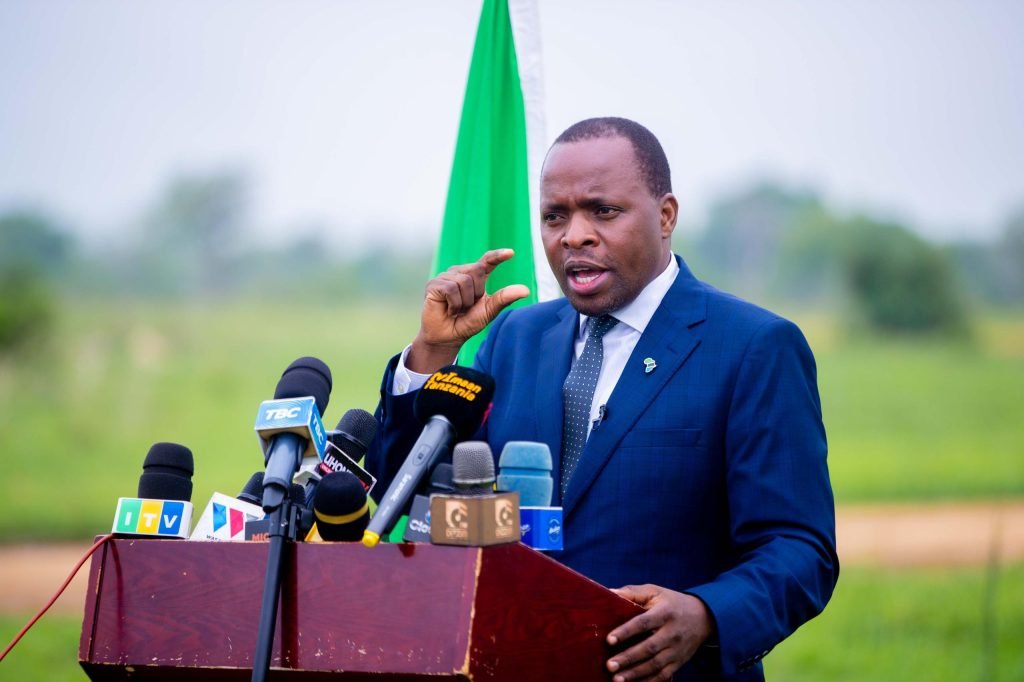
Barely a week after Media Wire Express questioned the motives behind Western travel advisories and moral prescriptions, Tanzania has delivered one of its strongest rebukes yet to external interference in domestic affairs.
In a sharply worded statement dated October 24, 2025, the Government of the United Republic of Tanzania accused Amnesty International of publishing “sweeping and unsubstantiated claims” in its latest brief, titled “Unopposed, Unchecked, Unjust: ‘Wave of Terror’ Sweeps Tanzania Ahead of 2025 Vote.”
The government’s tone left little room for misinterpretation. “While Tanzania remains open to constructive engagement,” the statement read, “it is regrettable that Amnesty International has chosen to publish a brief… without affording the Government a fair opportunity to respond before its release.”
For months, international NGOs and Western embassies have intensified scrutiny on Tanzania’s political and human rights landscape ahead of the October 2025 general elections. But this time, Dar es Salaam seems unwilling to take lectures from abroad.
The official response, signed by Chief Government Spokesman Gerson Msigwa, reaffirmed Tanzania’s “unwavering commitment to democratic governance, rule of law, and human rights” but stressed that such commitments “do not require validation from self-appointed monitors.”
The statement adds: “Freedom of expression, peaceful assembly, and access to information are protected under the Constitution… implemented in conformity with Article 19(3) of the ICCPR, which permits limited restrictions necessary to protect national security, public order, and the rights of others.”
That paragraph alone encapsulates what many in the Global South have been saying quietly: that the same international partners preaching rights often disregard national context and constitutional sovereignty when shaping their narratives.
This latest diplomatic exchange doesn’t stand alone. It comes on the heels of two widely read Media Wire Express analyses — “Who Decides How Societies Live?” and “Are Western Travel Warnings the New Sanctions?” — which questioned the motives behind Western moral and security interventions across Africa.
In “Who Decides How Societies Live?”, the government’s defense of cultural and moral sovereignty against Western-imposed LGBTIQ+ agendas struck a chord among readers. In “Are Western Travel Warnings the New Sanctions?”, Tanzania’s inclusion in U.S. visa restrictions was examined as a modern form of economic and diplomatic pressure.
Now, with Amnesty International’s brief and Tanzania’s fiery rebuttal, those analyses appear prophetic. The pattern is unmistakable: Western criticism, African pushback, and a growing determination by Tanzania to reclaim its narrative.
Between Rights and Respect
To the Tanzanian government, the issue isn’t rejection of human rights — it’s rejection of selective advocacy and the framing that casts African governments as perpetual violators.
In its statement, the government emphasized existing institutional safeguards such as the Commission for Human Rights and Good Governance (CHRAGG), the Director of Public Prosecutions (DPP), and the Judiciary, which it said “operate independently in line with the law.”
It further stated that “allegations of misconduct are investigated by competent authorities” and warned that the brief’s portrayal of Tanzania as a repressive state “undermines mutual respect that should guide international dialogue.”
In diplomatic language, that’s a clear message: criticism without context is interference.
What makes this episode significant isn’t just the rebuttal itself — it’s the timing.
With elections weeks away, Western missions have issued multiple travel advisories, and human rights organizations have released pre-election “risk assessments.” But none have acknowledged Tanzania’s relative peace and economic stability compared to regions in conflict.
As one political analyst in Dar es Salaam put it:
“You don’t see the same level of alarm when shootings happen in Chicago or protests turn violent in Paris. But one opposition rally in Africa, and suddenly there’s talk of a ‘wave of terror.’ That’s not about human rights; it’s about control.”
The sentiment reflects wider frustration across African capitals — that global watchdogs have turned into political actors, selectively amplifying issues to suit donor narratives.
Tanzania’s response mirrors a larger movement within the Global South — from Uganda to Ghana, from India to Brazil — where governments are redefining what “partnership” means.
Across these regions, a new generation of policymakers argues that international engagement should be built on mutual respect, not conditional aid or reputational coercion.
“We are not saying we are perfect,” a senior Tanzanian diplomat told Media Wire Express on condition of anonymity. “We are saying that no nation has a monopoly on morality. We have our own systems, our own culture, and our own way of resolving issues.”
This pushback isn’t isolationist — it’s assertive multilateralism. Tanzania remains an active member of the UN Human Rights Council, a signatory to key conventions, and an advocate for peace missions in the Great Lakes region. What it resists is the narrative of inferiority perpetuated through Western reporting.
Tanzania’s response to Amnesty International marks a diplomatic pivot — from defensive silence to proactive sovereignty. It signals that Dar es Salaam is no longer content to absorb unverified accusations while its own reforms and commitments are ignored.
The country’s message is clear: “Engage us with respect, not presumption.”
As the world heads toward an age of fractured alliances and competing narratives, Tanzania’s defiance may not only redefine its foreign policy posture — it may also inspire others across the continent to do the same.
In a world where political power is often disguised as moral concern, Tanzania’s quiet yet firm “no” is not resistance — it’s reclamation.